- White Christmas (1954)
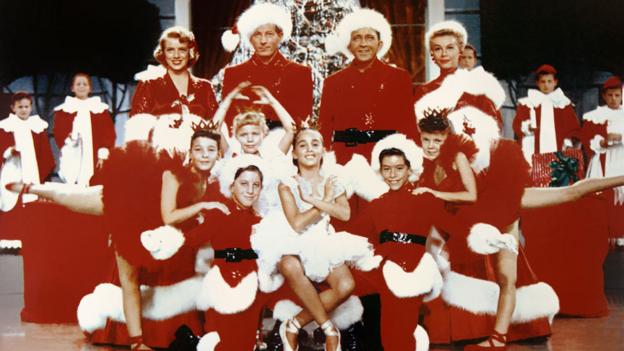 As much of a Christmas
confection as a candy cane, White Christmas, is one of the holiday
season’s great explosions of joy. It’s a movie that really is the sum of
its parts: perfectly constructed Irving Berlin songs, the peerless
baritone of Bing Crosby, the manic comedic energy of Danny Kaye and the
athletic dancing of Vera-Ellen. The story is compelling too: a couple of
song-and-dance men want to stage a lavish tribute to their former
commanding general in the US Army. But the decisions they make about the
spectacle they’re preparing involve thought-provoking questions of
taste at a time of year usually defined by kitsch.
(AF Archive Alamy)
As much of a Christmas
confection as a candy cane, White Christmas, is one of the holiday
season’s great explosions of joy. It’s a movie that really is the sum of
its parts: perfectly constructed Irving Berlin songs, the peerless
baritone of Bing Crosby, the manic comedic energy of Danny Kaye and the
athletic dancing of Vera-Ellen. The story is compelling too: a couple of
song-and-dance men want to stage a lavish tribute to their former
commanding general in the US Army. But the decisions they make about the
spectacle they’re preparing involve thought-provoking questions of
taste at a time of year usually defined by kitsch.
(AF Archive Alamy)
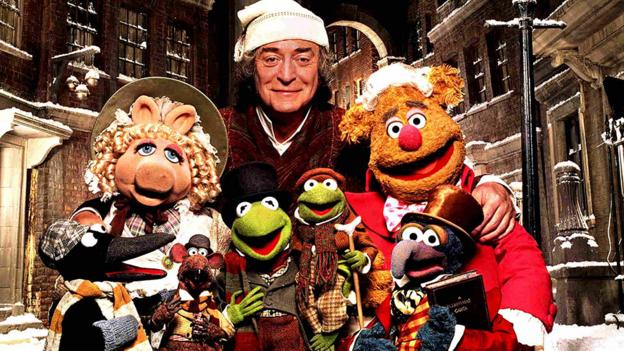
- The Muppet Christmas Carol (1992)
- There have been
countless variants of Dickens’ yuletide redemption story, including
versions starring Mickey Mouse, The Jetsons and Mr Magoo. But the
greatest of these by far is The Muppet Christmas Carol. Having Jim
Henson’s famous felt creations anchor the film automatically punches up
the fantastical elements of Dickens’ narrative – after all, this is a
story of ghosts, magic and time-travel. But it is Michael Caine’s
performance that makes it, and he acts opposite the Muppets as if they
are flesh and blood. The seriousness with which he invests his
performance makes it an explosion of emotion, a deeply felt
interpretation of Dickens’ story rather than a parody of it – showing
that the smartest way to renew a classic isn’t always with irony, but
sincerity.
(Buena Vista Pictures)
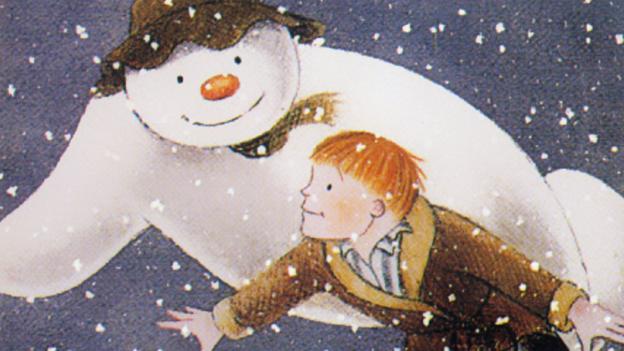 The Snowman (1982)
 - Only 26 minutes long, director
Dianne Jackson’s low-fi animated film adaptation of Raymond Briggs’
children’s book The Snowman plays like visual music. Completely
wordless, the story of a young boy in the English countryside who builds
a snowman then flies off to the North Pole with him is full of stunning
images: wild horses charging across a field, revelers on an ocean
liner, a whale slapping its tale into the sea, the northern lights
shimmering over the Pole. Jackson makes her film look like crayon
drawings in motion, suffused with wonder and melancholy – the result is
as direct a line into a child’s imagination as has been put on film.
(Rex Features)
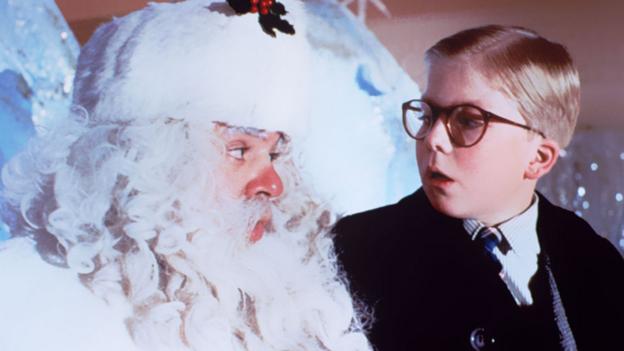
- A Christmas Story (1983)
- A time-travel portrait of
1940s America that is also a powerfully nostalgic vision of childhood. A
Christmas Story finds the universal in the hyper-specific. Young
Ralphie, an avatar for the film’s co-writer and narrator Jean Shepherd,
spends his lower-middle class childhood in Indiana listening to the
radio, playing with secret decoder rings, basking in the electric glow
of an appalling leg-shaped lamp and being menaced by a truly terrifying
Santa Claus. A Christmas Story captures not only childhood’s joys but
its frights, and shows that a little terror in childhood can be an
enriching thing.
(Rex Features)
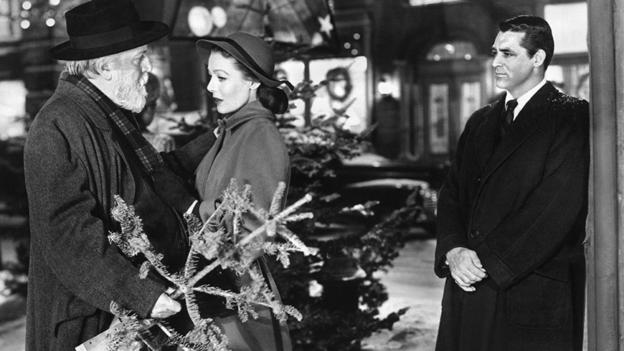 The Bishop’s Wife (1947)
 - German emigre Henry Koster’s
film takes a similar premise to It’s a Wonderful Life – a man beset by
money troubles (David Niven) receives inspiration from an angel (Cary
Grant) – and turns it on its head. Niven plays a bishop more concerned
with funding a gaudy cathedral than the spiritual well-being of his
flock. In helping him to gain perspective about what’s really important,
Grant’s angel ends up criticising much about organised religion. He
even seems to identify the most with a cranky old atheist professor
(Monty Wooley). Quietly subversive as it may be, The Bishop’s Wife is
also the moment in which Cary Grant, the actor, became Cary Grant, the
myth – from this point in his career relied more on his star persona
than stretching himself as a performer.
(AF Archive Alamy / Samuel Goldwyn Company)
........... To be Continued
Tuesday, December 23, 2014
The 10 best films of 2014

Subscribe to:
Post Comments (Atom)
No comments:
Post a Comment